By MARIA SHERMAN AP Music Writer
Moments before Ms. Lauryn Hill hopped on a call with The Associated Press, she and Fugees’ bandmate Wyclef Jean stood in the center of London’s Piccadilly Circus, surrounded by fans. Broadcast above them, on the bright LED screen of Piccadilly Lights, was a short film curated by Hill and created by Los Angeles artist Lauren Halsey: an animated, colorful collage depicting the heroes and symbols of the global African diaspora.
The message was clear: This is a a celebration of community, culture, music and art.
“The crowd was captivated,” Hill said.
“It was surreal,” Jean jumped in. “The love was felt. It was amazing.”
It was a tease of what’s to come. On Friday, Hill will bring her Diaspora Calling! festival to the U.K. for the first time, marking 10 years since its inaugural edition in Brooklyn.
The event, hosted by Dave Chappelle and featuring performances by Erykah Badu, YG Marley, Zion Marley, Giggs, Fireboy DML and other artists, will be held at The National Bowl in nearby Milton Keynes. And its center: Hill and Jean, two-thirds of the Fugees, will perform their landmark album “The Score” in its entirety.
Below, Hill — joined briefly by Jean — discuss their festival, the 30th anniversary of “The Score” and the legacy of the late D’Angelo. This interview has been edited for clarity and brevity.
AP: Why bring Diaspora Calling! to the UK?
HILL: We were given an opportunity by the promoters — the same promoters that do Reggae Land.
He gave me the venue. And I said, ‘This is what I want to do.’ We’re basically blessed to have the opportunity. And, you know, ’tis the season to bring people together in the name of growth, healing and pushing forward.
AP: The African diaspora is everywhere — are you hoping to do other international editions?
HILL: Absolutely, absolutely, absolutely.
AP: How has the concept evolved since the first event in 2016?
HILL: First of all, it started when I did a show in Ghana. There was a gentleman who brought me out to Ghana. And as I was talking to him, I realized that our conversation was not just about the immediate subject matter. I knew that we made a connection for a reason. And I know myself and Wyclef have community over the years — even when we weren’t necessarily doing the Fugees thing anymore, we built community all over the diaspora. And now it’s the time to bring them together.
AP: The lineup is dynamic. How do you go about selecting artists?
HILL: We put a call out to the people that we know, love and respect. And I’ve gotten so much positivity — an abundance of responses, in terms of the creative community out here wanting to participate. So that’s huge.
AP: You and Wyclef Jean will perform all of “The Score” on Friday, in celebration of its 30th anniversary. Has your relationship to that album changed in that time?
HILL: Absolutely. Absolutely. That’s a timeless piece of work for us as well. Timeless. How do you feel about it, Wyclef?
JEAN: You hit it on the dot. You know, I remember when I was coming up, listening to like Bob Marley’s “Exodus”; a lot of the early Dylan, Bob Dylan records; Pink Floyd’s “The Wall”; The Police’s “Synchronicity” and we got “The Score.” So that’s forever.
AP: It is interesting to hear that you have been transformed by it the way your listeners have.
HILL: I think what is powerful about the album was that, you know, I’m a big fan of what Wyclef does. And I think he’s appreciative of what I do. So, we engage with each other’s art. And every time we perform it, even though (it’s) singing older lyrics, there’s a new energy, a new spirit. There’s a timelessness. I almost feel like we’re reclaiming timelines, healing timelines, so to speak, every time we’re performing.
JEAN: A hundred percent. Every time I perform “The Score” now, I feel like it’s the first time.
HILL: Yeah. It doesn’t feel old.
AP: How does performing that at Diaspora Calling! differ from another kind of concert?
HILL: It’s kind of the pinnacle of what the Fugees were all about. Our makeup is diaspora calls. I think we were a call to a particular unity, a particular kind of reflection and a particular kind of resistance to certain ideas that we knew better than. And we wanted to channel that outside and have other people feel what we were certain about, which is that there was being and resourcefulness and incredible brilliance throughout diaspora. And that division was not really an option.
AP: That is beautifully put. That spirit reminds me of your performance at the Grammys earlier this year, where you paid tribute to the late Roberta Flack and D’Angelo. We’re approaching the one-year anniversary of D’Angelo’s passing. How do you hope he continues to be remembered?
HILL: We lost another timeless soul who made timeless music. We obviously want to protect his family and just keep holding up that brilliance.
He was good — without question.
News
Q&A: Ms. Lauryn Hill on the Diaspora Calling! festival in the UK, the Fugees’ legacy and D’Angelo
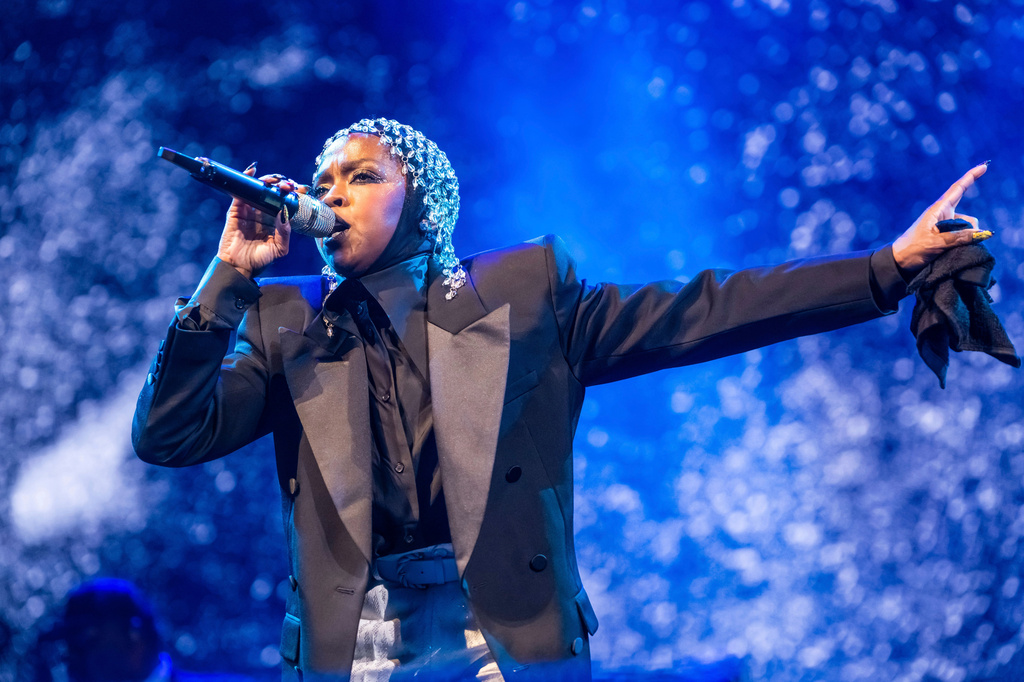
FILE - Lauryn Hill performs during "The Miseducation of Lauryn Hill" 25th anniversary tour on Oct. 19, 2023, in New York. (Photo by Charles Sykes/Invision/AP, File) Photo: Associated Press